
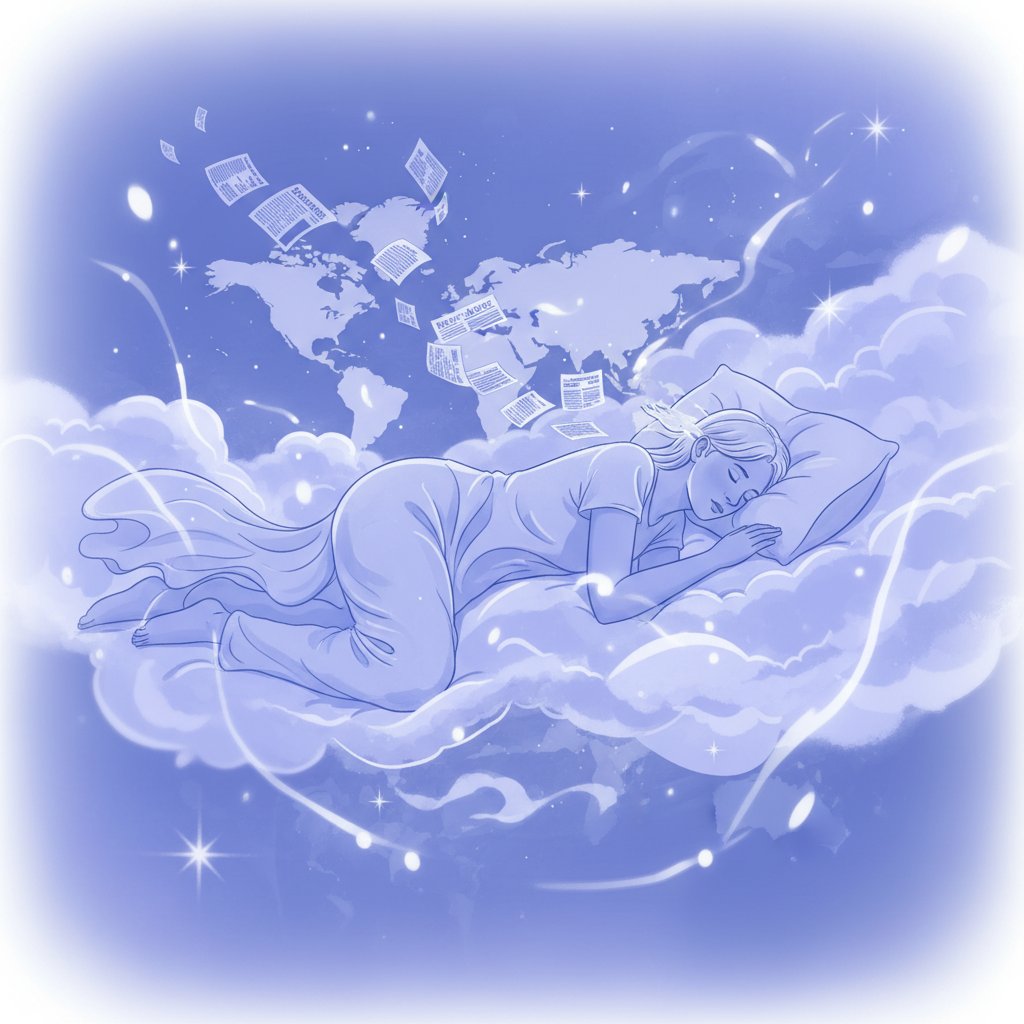
Your dreams do not exist in a vacuum. Research consistently shows that major world events seep into our collective dream life, reshaping what we see, feel, and fear when we close our eyes. From pandemics to political upheaval, economic anxiety to the rise of AI, current events leave measurable fingerprints on dream content.
What Is Event-Driven Dreaming?
Event-driven dreaming occurs when real-world events influence dream content on a broad scale. This is not just individual stress response but a collective phenomenon. When millions of people share a common anxiety, their dreams begin to reflect shared themes.
The brain consolidates waking experiences during sleep. When those waking experiences are dominated by breaking news, social media feeds, and global uncertainty, dreams become a processing ground for collective anxiety. Studies show that 65% of dreams mirror features of recent waking life events, and during periods of crisis, that percentage climbs higher.
Why World Events Enter Our Dreams
Several mechanisms explain why current events shape dream content:
Emotional Residue: The emotional charge of news stories lingers in the brain and gets reprocessed during REM sleep. A disturbing headline read before bed can directly influence that night's dreams.
Threat Monitoring: The brain evolved to scan for threats. When the environment signals danger through news of wars, pandemics, or economic collapse, the threat-detection system stays activated during sleep.
Social Contagion: Hearing others discuss their fears and dreams amplifies the effect. Social media creates rapid feedback loops where anxiety spreads and reinforces itself.
Loss of Control: Events beyond individual control trigger helplessness, which is a primary driver of anxiety dreams. You cannot personally resolve a pandemic or a financial crisis, and that powerlessness becomes raw material for dreams.
Historical Examples
The COVID-19 Pandemic (2020-2023)
The pandemic produced some of the most documented shifts in collective dream content in history. Research analyzing 44,000 dreams from Reddit found that during COVID lockdowns, people dreamed less about relationships and outdoor activities and more about:
- Teeth and blood
- Violence and death
- Religious and spiritual themes
- Indoor locations and confinement
Healthcare workers reported particularly vivid and traumatic dreams related to patient care and personal vulnerability.
Wars and Geopolitical Conflict
After the start of the war in Ukraine, Reddit dream data showed spikes in dreams about soldiers and nuclear war. This pattern has repeated throughout history: during the Gulf War, Cold War, and post-9/11 periods, populations far from combat zones reported war-themed dreams driven by media exposure.
Economic Recessions
Financial crises consistently generate dreams about:
- Losing jobs or homes
- Being unable to pay for things
- Falling or sinking
- Being chased by unknown figures
The 2008 recession and subsequent economic uncertainties produced waves of financial anxiety dreams even among people who were not directly affected.
The AI Revolution (2023-Present)
The rapid rise of generative AI has created a new category of anxiety dream. Surveys show that 1 in 5 people now regularly dream about AI, with common scenarios including:
- AI replacing them at work
- AI becoming sentient or hostile
- Being trapped in AI-generated simulations
- Technology malfunctioning at critical moments
Doomscrolling about AI before bed increases the likelihood of AI nightmares by 31%.
Who Is Most Affected?
Not everyone responds equally to event-driven dreaming:
- High news consumers dream about current events more frequently
- Empathetic individuals absorb collective anxiety more easily
- People with existing anxiety are more susceptible to event-themed dreams
- Young adults (18-35) report the highest rates of technology and AI dreams
- Essential workers during crises often have the most vivid event-related dreams
- Social media users who doomscroll before bed are significantly more affected
Practical Strategies
Managing News Consumption
- Set a news curfew. Stop consuming news at least two hours before bed. This gives your brain time to shift out of threat-monitoring mode.
- Choose your sources carefully. Factual, measured reporting triggers less anxiety than sensationalized coverage.
- Limit social media before sleep. Doomscrolling is one of the strongest predictors of event-related nightmares.
- Schedule your news intake. Check news at set times rather than continuously throughout the day.
Processing Event-Related Anxiety
- Talk about your concerns. Verbalizing fears during the day reduces their power at night.
- Write before bed. Spend 10 minutes journaling about what is worrying you. Research shows this offloads concerns from the sleeping brain.
- Distinguish between what you can and cannot control. Make a list. Focus your energy on actionable items.
- Stay connected. Social support buffers against collective anxiety. Isolation amplifies it.
Working with Event-Driven Dreams
- Keep a dream journal. Tracking dreams during turbulent times reveals patterns and helps you process emotions consciously.
- Notice the emotion, not just the plot. The feeling in the dream matters more than the specific scenario. Fear? Helplessness? Anger? Name it.
- Practice imagery rehearsal. Before sleep, visualize a peaceful resolution to recurring anxious dream themes.
- Use dreams as a barometer. If current-event dreams spike, your anxiety likely needs attention. Treat the dream as useful feedback, not a threat.
Protecting Your Sleep
- Maintain consistent sleep schedules even when news cycles are chaotic
- Create a buffer zone between news consumption and sleep
- Use relaxation techniques: deep breathing, progressive muscle relaxation, or guided meditation
- Make your bedroom a news-free zone: no phones, no news apps, no TV news before bed
When to Seek Help
Consult a mental health professional if:
- Event-related dreams cause persistent insomnia or sleep avoidance
- You experience flashbacks or hypervigilance during the day
- Dreams are accompanied by panic attacks upon waking
- Your daily functioning is impaired by anxiety about world events
- You cannot stop consuming news despite knowing it harms your sleep
The Bigger Picture
Event-driven dreams are not a disorder. They are evidence that your brain is working as designed, processing real threats and helping you adapt to a changing world. Understanding this process can transform anxiety dreams from frightening experiences into opportunities for self-awareness and emotional growth.
Your dreams reflect not only your personal concerns but your connection to the wider human experience. In times of collective crisis, dreaming together is one of the ways we process, adapt, and ultimately move forward.
Disclaimer: This guide provides educational information only. It does not replace professional medical or mental health advice. Consult qualified healthcare providers for personalized guidance.