
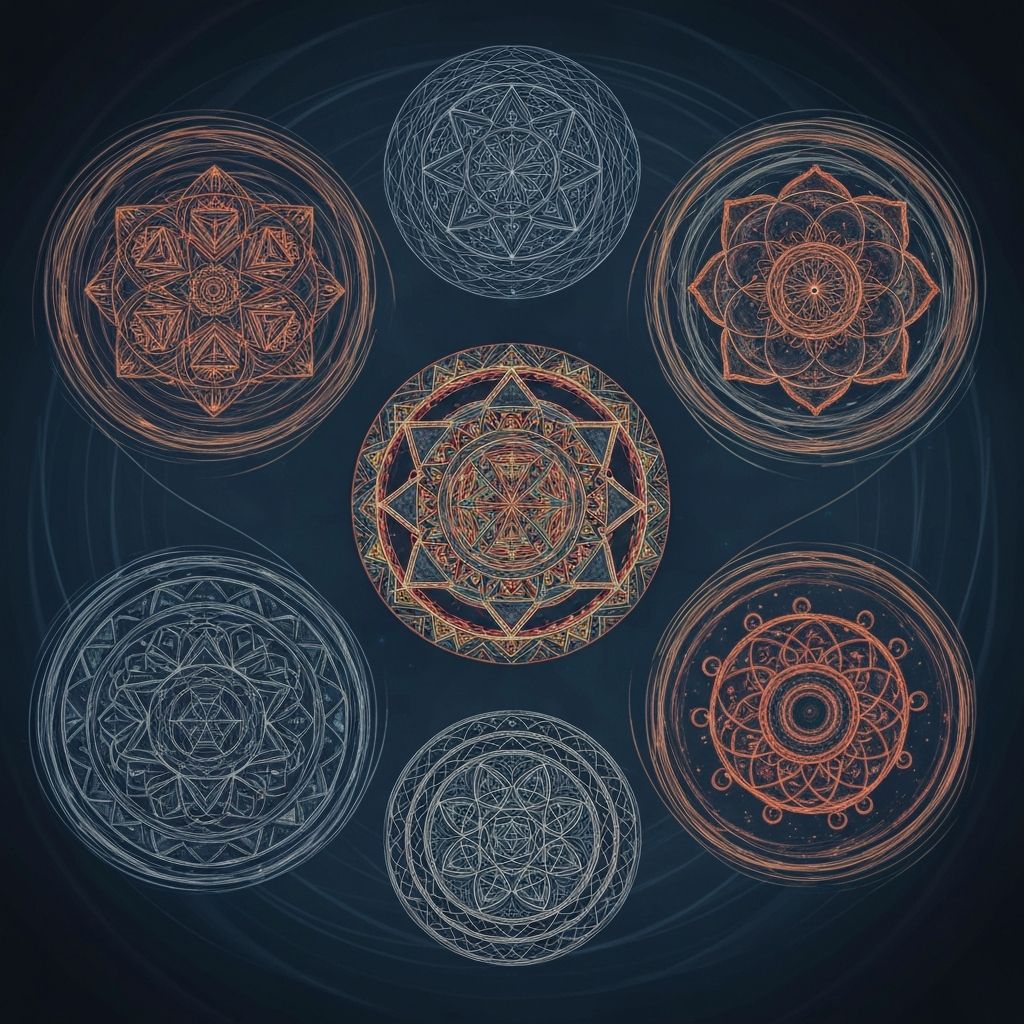
Archetype
An archetype is a universal, primordial pattern or image that derives from the collective unconscious. Introduced by Carl Jung, archetypes are innate, inherited templates that shape human experience, appearing in myths, fairy tales, art, and dreams across all cultures and time periods.
Key Concepts
- Universal patterns: Found across cultures and throughout history
- Collective unconscious: Shared psychological inheritance of humanity
- Symbolic manifestation: Appear as characters, situations, or symbols
- Instinctive recognition: Feel familiar even when newly encountered
- Emotional resonance: Evoke deep psychological responses
Major Jungian Archetypes
The Self
- Central archetype of wholeness and integration
- Represents the totality of the psyche
- Goal of individuation process
- Often symbolized by mandalas or geometric wholeness
The Shadow
- Repressed, denied, or undeveloped aspects of personality
- Contains both negative and positive qualities
- Often appears as threatening figures in dreams
- Integration leads to psychological wholeness
The Anima/Animus
- Anima: Feminine aspect in men's psyche
- Animus: Masculine aspect in women's psyche
- Represents the contrasexual aspects of personality
- Guides relationship to opposite gender and inner balance
The Persona
- Social mask or public face
- How we present ourselves to the world
- Can become problematic when over-identified with
- Necessary for social functioning but shouldn't define identity
The Great Mother
- Nurturing, protective, life-giving qualities
- Can also be devouring or smothering
- Associated with nature, fertility, and creation
- Appears as mother figures, goddesses, or earth symbols
The Wise Old Man/Woman
- Wisdom, knowledge, guidance
- Often appears as teacher, mentor, or sage in dreams
- Represents higher consciousness and intuitive knowing
- Guides the individuation journey
The Trickster
- Disruption, transformation, breaking rules
- Challenges rigid thinking and conventions
- Can be destructive but serves growth
- Appears as jokers, fools, or unpredictable characters
The Hero
- Journey, transformation, overcoming challenges
- Represents ego development and conscious growth
- Classic hero's journey narrative
- Slaying dragons, rescuing, achieving the impossible
Archetypes in Dreams
Dreams frequently feature archetypal imagery:
- Provide access to collective wisdom
- Guide personal development
- Offer solutions to life challenges
- Connect individual to universal human experience
- Signal important psychological transitions
Working with Archetypes
Understanding archetypes helps:
- Recognize patterns in personal dreams and life
- Connect personal experience to universal themes
- Deepen self-understanding
- Navigate life transitions
- Access collective human wisdom
Cultural Variations
While universal, archetypes manifest differently across cultures:
- Same underlying pattern, different cultural expressions
- Influenced by cultural myths and stories
- Personal and cultural layers interact
- Recognition transcends cultural boundaries
Related Concepts
- Collective unconscious: Source of archetypal patterns
- Individuation: Process of integrating archetypal energies
- Myth: Cultural expressions of archetypal themes
- Symbol: How archetypes manifest in consciousness