
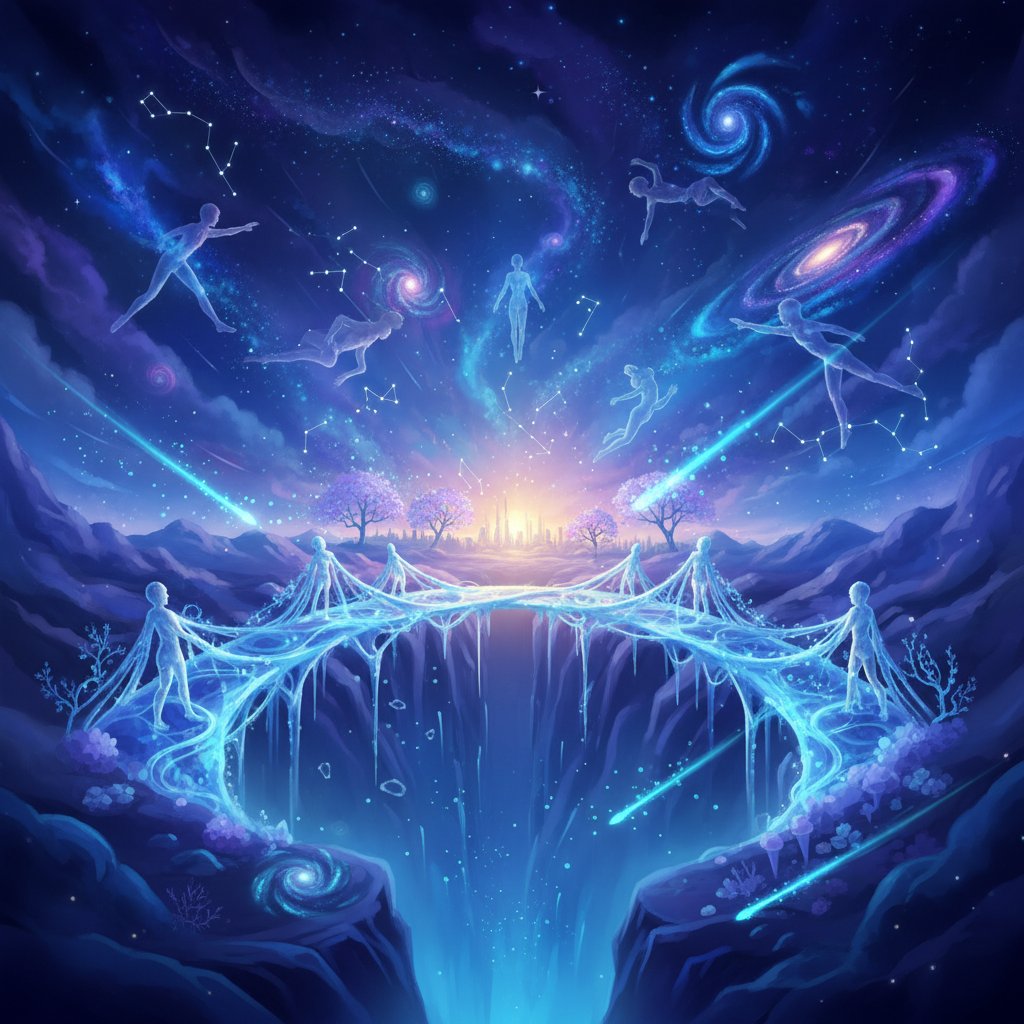
A bridge is one of the most architecturally precise metaphors your dreaming mind can construct. It is not the destination or the starting point — it is the in-between, the suspended moment of crossing from what was to what will be. When a bridge appears in your dream, your subconscious is mapping your relationship with change itself.
Common Meanings
- Life transition in progress — you are between phases, neither fully in the old life nor the new one, and the dream reflects this liminal state
- A decision point — the bridge represents a choice you must make, with the far side symbolizing the outcome you cannot yet fully see
- Connection and reconciliation — bridges link two separated things, suggesting a desire to reconnect with someone, some part of yourself, or a lost opportunity
- Risk assessment — your subconscious is weighing whether the path ahead is stable enough to cross
- Overcoming obstacles — the bridge exists because something impassable lies below, and your dream is showing you the way across
- Irreversible change — some bridges can only be crossed once, evoking the phrase "burning bridges" and the finality of certain life choices
Context Modifiers
Crossing a bridge successfully — you are ready for the transition ahead. This dream often appears right before or during significant life changes — new jobs, relocations, relationship commitments — and signals inner confidence even if you feel anxious when awake.
Bridge collapsing while crossing — the foundation of your transition feels unstable. Something you relied on — a plan, a person, a belief — is giving way. This does not mean the change is wrong, but that your current approach needs reassessment. Consider what supports you are leaning on and whether they are truly solid.
Standing at a bridge but unable to cross — decision paralysis. You can see the other side and may even want to reach it, but something holds you back. This dream asks you to name the fear: is it fear of the unknown, fear of leaving something behind, or fear of who you will become on the other side?
Building or repairing a bridge — you are actively creating the conditions for a transition. This is a deeply constructive dream, suggesting agency and effort in connecting two parts of your life or building a path where none existed.
Falling off a bridge — loss of footing during a transition. This connects to classic falling dreams but adds the context of a deliberate crossing gone wrong. It often reflects a fear that you are not competent enough for the change you are attempting.
The bridge typology — the material matters. A wooden bridge suggests a natural but fragile transition — temporary, organic, easily damaged. A steel bridge signals engineered confidence and modern problem-solving. A rope bridge speaks to risk, adventure, and the bare minimum needed to cross. A stone bridge evokes ancient wisdom, tested paths, and transitions that generations before you have made.
Psychological Lens
Bridges occupy a unique place in dream psychology because they are one of the few symbols that are simultaneously practical and deeply metaphorical. Freud interpreted bridges as connections between the conscious and unconscious mind — the dreamer literally walking the span between what they know and what they have repressed.
Jung took this further, viewing the bridge as a symbol of individuation — the lifelong process of integrating different aspects of the self. The far side of the bridge represents the unified self you are growing toward, while the chasm below holds the shadow material you must acknowledge during the crossing.
Contemporary research on transitional stress confirms that bridge dreams spike during life transitions. The brain uses architectural imagery to process the structural changes happening in your identity — you are literally rebuilding your mental framework, and the bridge is your subconscious blueprint for how that reconstruction might go.
What lies beneath the bridge is equally diagnostic. Water indicates an emotional transition. A void or darkness suggests fear of the unknown. Traffic or a busy city below points to social pressure influencing your change. Ground far below connects to vertigo and the high stakes of the decision.
Cultural Perspectives
In Norse mythology, Bifrost — the rainbow bridge connecting Midgard (earth) to Asgard (the realm of the gods) — represents the passage between mortal and divine existence. Bridge dreams in this tradition symbolize aspiration toward something transcendent.
Japanese culture holds bridges as sacred thresholds. The concept of hashi (bridge) is phonetically linked to hashi (edge/boundary), reinforcing bridges as liminal spaces where ordinary rules shift. Dreaming of a bridge in this context means you are at an edge — a place where transformation becomes possible.
In Western literature and film, bridges consistently represent points of no return — the bridge in every hero's journey where commitment replaces hesitation. Your dream may be staging your own hero's journey, placing you at the threshold of commitment.
Christian symbolism frames bridges as paths of faith — crossing requires trust in something you cannot fully see or control, paralleling the leap of faith that major life changes demand.
What to Do
- Map your transition — identify what the two sides of the bridge represent in your current life. What are you leaving? What are you heading toward?
- Check the bridge condition — if it was sturdy, trust your path. If it was crumbling, examine what in your real-life transition plan needs reinforcement before proceeding
- Note what is below — the substance beneath the bridge reveals what you are trying to avoid or cross over during this transition. Water points to emotions, void points to fear
- Assess your emotions on the bridge — confidence, terror, exhilaration, and hesitation each point to your true feelings about the change ahead. Read our emotional dreams guide for deeper analysis
- Consider the journey pattern — if you are dreaming of bridges alongside roads, vehicles, or paths, your subconscious is mapping a larger life trajectory
- Honor the pause — a bridge dream does not demand immediate action. It is showing you the crossing exists. When you are ready, you will know
Frequently Asked Questions
What does a bridge symbolize in a dream?
A bridge represents a transition — the space between where you are and where you are heading. It symbolizes decisions, connections between different parts of your life, and the courage required to move from one phase to another.
What does a broken or collapsing bridge mean in a dream?
A broken bridge suggests a transition that feels blocked or unsafe. It may indicate that a path you were counting on is no longer viable, a relationship has fractured, or you feel unprepared for a change you are facing.
Is dreaming about crossing a bridge a good sign?
Generally yes. Successfully crossing a bridge in a dream signals readiness to embrace change, confidence in navigating uncertainty, and the ability to connect different aspects of your life. The emotions you feel during the crossing add important nuance.
Why do I dream about being afraid to cross a bridge?
Fear on a bridge reflects anxiety about a real-life transition — a career move, relationship change, or personal growth challenge. The dream is not warning you away from the crossing but revealing the emotional weight of the decision ahead.
What does it mean if the bridge is over water?
Water beneath a bridge adds an emotional dimension to the transition. Calm water suggests a smooth emotional passage, turbulent water indicates emotional upheaval during the change, and dark water points to unknown feelings that the transition will surface.