
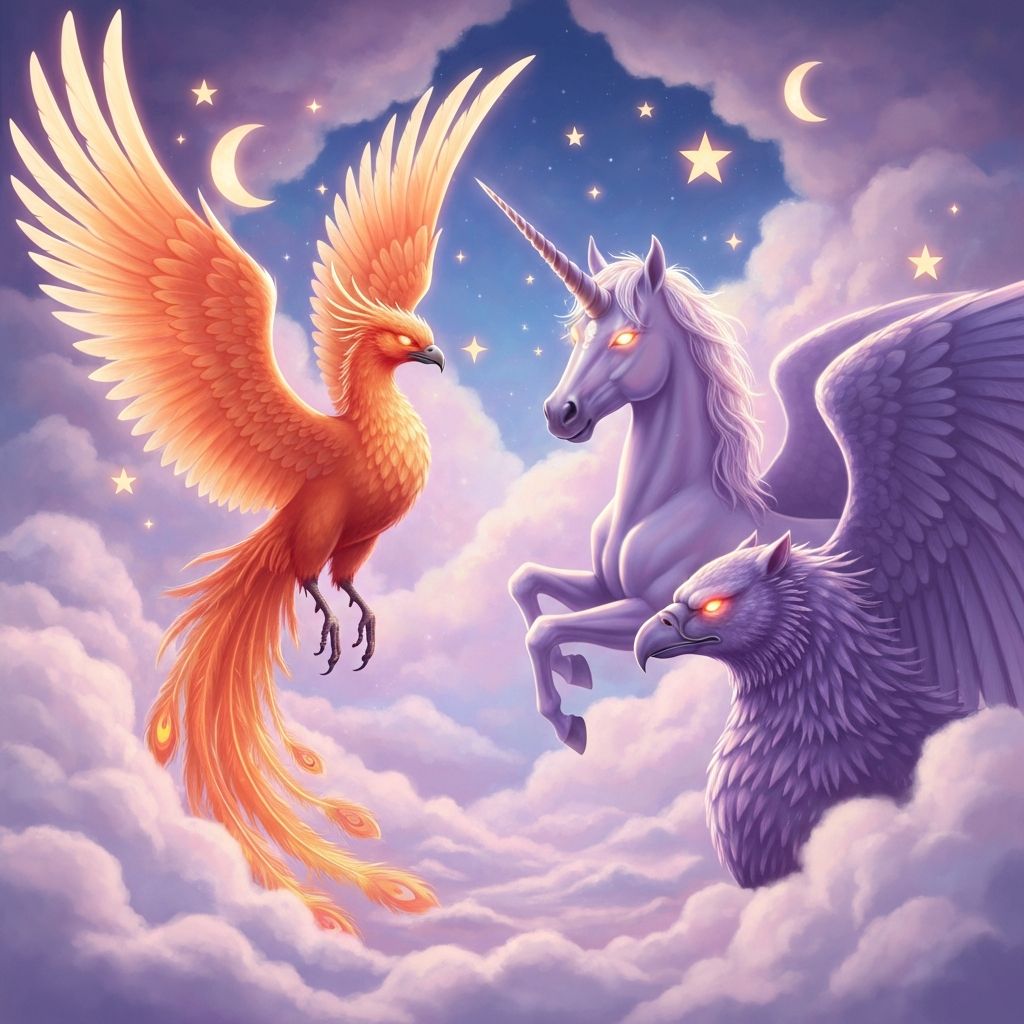
Birds have been messengers between worlds since the earliest human myths — carrying prayers upward, delivering omens downward, and bridging the gap between the earthly and the divine. When a bird appears in your dream, it arrives carrying thousands of years of symbolic weight. But it also carries a message uniquely yours.
Common Meanings
- Freedom and liberation: The most universal bird symbol — the desire to break free from constraints, whether emotional, professional, or psychological
- Spiritual messages: Across cultures, birds are divine messengers. A bird in your dream may represent intuition, spiritual guidance, or a truth your waking mind hasn't acknowledged
- Perspective and vision: Birds see from above. Dreaming of them often signals a need to rise above your current viewpoint and gain a broader understanding of your situation
- Aspiration and ambition: Birds in flight embody the human desire to reach higher — career goals, creative ambitions, or personal growth
- The soul itself: In many traditions (Egyptian ba, Christian Holy Spirit, Hindu hamsa), birds represent the soul or the highest aspect of the self
- Communication: Birds sing, call, and signal. Their presence in dreams often relates to something that needs to be expressed or heard
Context Modifiers
Birds flying freely: This is the dream's most optimistic bird scenario. It typically appears when you feel — or are ready to feel — unburdened. If the birds are flying upward, your ambitions are aligned with your energy. If they're soaring at a distance, you may be admiring freedom you haven't yet claimed for yourself.
A caged bird: One of the most emotionally resonant dream images. A caged bird almost always points to suppression — talents you're not using, emotions you've locked away, or a relationship that feels confining. Pay attention to whether the cage door is open or closed: an open door you refuse to walk through carries a very different message than one that's locked.
A bird landing on you: This is widely considered a blessing symbol. It suggests receptivity — you're open to insight, and the unconscious is responding by delivering it directly. The species and your emotional reaction shape the message. A dove landing on your shoulder feels different from a crow perching on your arm, and your dream knows the difference.
A dead bird: Rather than a dark omen, a dead bird typically signals completion. Something has ended — an idea, a hope, a relationship — and your psyche is processing the loss. Dead birds frequently appear during career transitions or after creative projects have concluded. They invite mourning, then moving on.
A flock of birds: Flocks represent community, collective movement, or social belonging. A coordinated flock suggests harmony with your social group. A chaotic flock may reflect feeling overwhelmed by social obligations or group dynamics. Migrating flocks point to life transitions — moving, changing jobs, or entering a new chapter.
Singing birds: Birdsong in dreams is almost universally positive. It represents joy, creative expression, and emotional well-being. If you hear birds singing but can't see them, the message may be that happiness is closer than you think — you just haven't looked in the right place yet.
Psychological Lens
Carl Jung considered birds among the most important dream symbols, linking them to the transcendent function — the psyche's ability to bridge opposing tensions and produce new understanding. For Jung, a bird in flight represented the movement from the ego's narrow concerns toward the broader wisdom of the Self. He frequently noted that birds appeared in patients' dreams at moments of psychological breakthrough.
Freud, characteristically, connected bird dreams to sexual symbolism and the desire for escape from repression. The act of flying — which birds embody — represented for Freud the wish to transcend social and moral constraints.
Contemporary neuroscience offers a complementary view. The brain regions activated during REM sleep overlap significantly with those involved in spatial navigation and memory consolidation. Birds — creatures defined by their mastery of three-dimensional space — may appear in dreams as the brain processes spatial metaphors for life challenges: rising above, navigating obstacles, finding the right direction.
Cultural Perspectives
Native American traditions regard birds as sacred intermediaries. Eagles carry prayers to the Creator, ravens are trickster-teachers who bring necessary chaos, and hummingbirds represent endurance and the sweetness of life. Dreaming of a specific bird may connect to the lessons of that bird's medicine.
In Islamic dream interpretation, birds often represent the soul or good news. A bird flying into one's home signifies blessings or important tidings. However, a black bird may carry warnings, and a bird of prey can represent authority or power.
East Asian symbolism is richly specific: cranes represent longevity and marital fidelity in Japanese tradition, while the phoenix (fenghuang) in Chinese culture embodies renewal, virtue, and the balance of yin and yang. Magpies in Korean tradition are harbingers of good news.
In Celtic tradition, birds were associated with the Otherworld and prophetic knowledge. Druids practiced ornithomancy — reading the future through bird behavior — and this sensitivity to avian messages persists in the dreamscape.
What to Do
- Identify the species: If you can remember what kind of bird appeared, research its specific symbolism — species matter enormously in bird dream interpretation
- Note the bird's condition: Flying, caged, injured, or dead birds each carry fundamentally different messages. The bird's state often mirrors your own emotional state
- Consider what needs freeing: Bird dreams frequently arrive when something in your life needs to be released or expressed. Ask yourself: what am I keeping caged?
- Listen for the message: If the bird seemed to be communicating (singing, calling, making eye contact), your unconscious may be delivering specific guidance. Journal immediately upon waking
- Connect to your aspirations: Birds flying high often reflect ambitions that are ready to launch. If you've been hesitating on a goal, a bird dream may be your psyche's way of saying: you're ready to fly
Frequently Asked Questions
What does it mean to dream about birds flying?
Birds flying in dreams typically symbolize freedom, aspiration, and spiritual elevation. They often appear when you're ready to rise above a challenge or when your creative energy is seeking expression. The direction of flight matters — upward suggests ambition, while flying away may signal release.
What does a dead bird mean in a dream?
A dead bird in a dream usually represents the end of a phase, a lost opportunity, or a creative idea that didn't take flight. Rather than being purely negative, it often signals that something must be released before new growth can begin.
Why did I dream about a bird landing on me?
A bird landing on you in a dream is considered a positive sign across many traditions. It suggests you're receiving a message from your unconscious or a spiritual source, and that you're in a state of openness and receptivity.
What do specific bird species mean in dreams?
Different species carry distinct meanings: eagles represent ambition and authority, crows signal transformation or hidden knowledge, doves symbolize peace and reconciliation, owls indicate wisdom or warnings, and hummingbirds represent joy and resilience.